
If the iPSCs you would like to access are currently listed as unavailable or
you would like information on local partners in USA, Australia, New Zealand or Japan who can support order and delivery,
please get in touch via
Contact@EBiSC.org.
UNEWi018-A
iPSC line
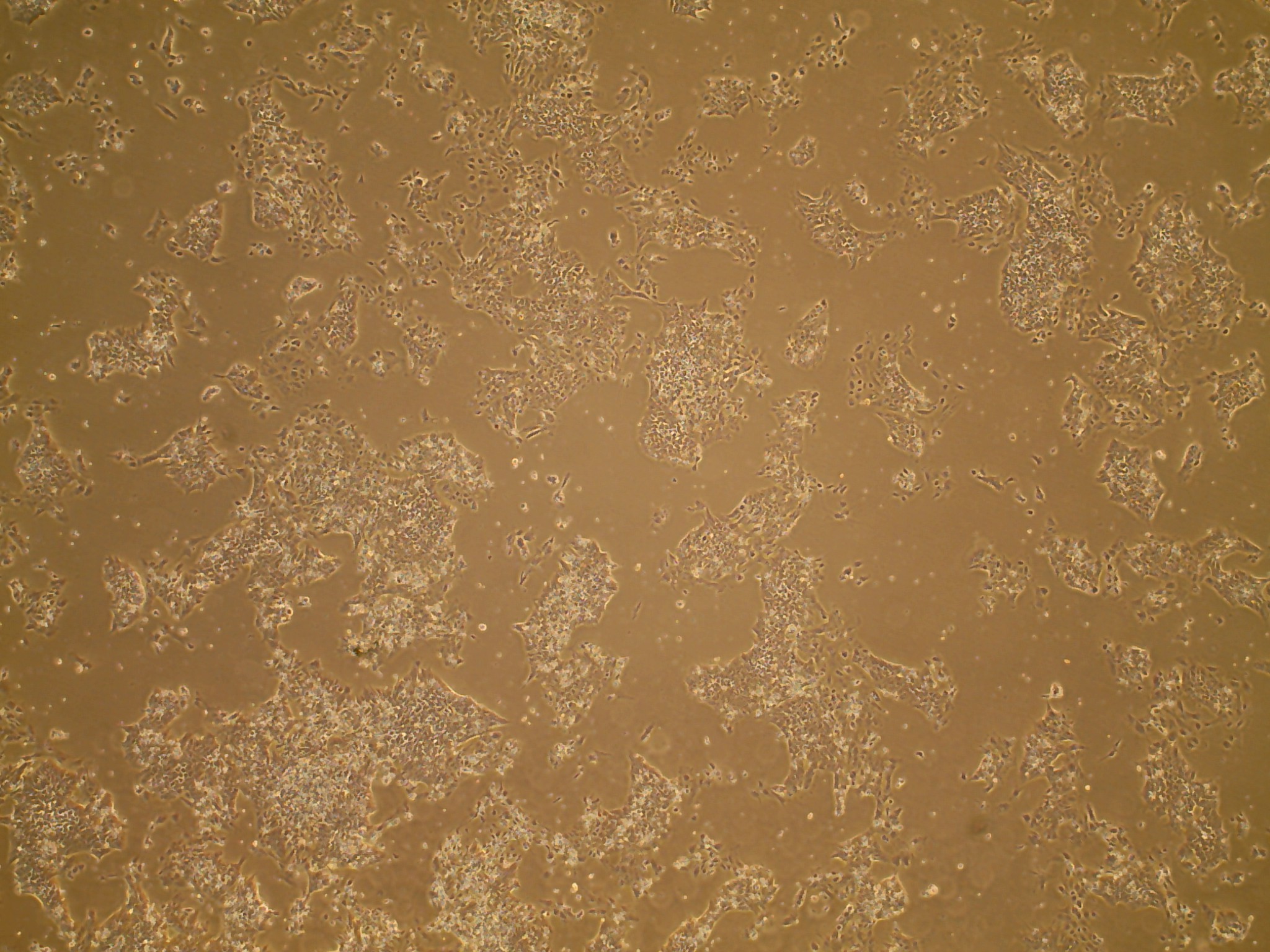
Timepoint: 48 hours post-passage
Magnification: x4
Magnification: x4
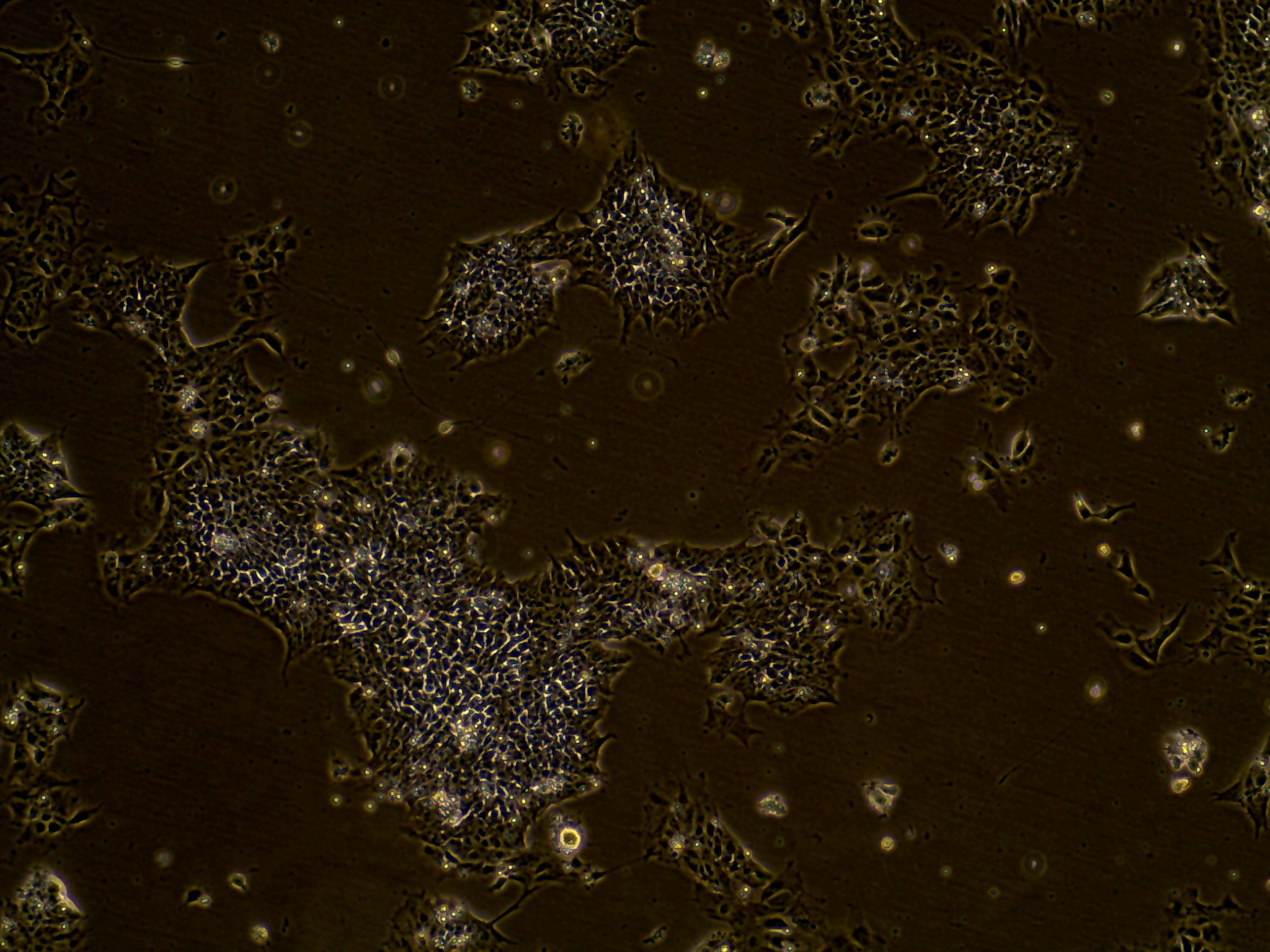
Timepoint: 48 hours post-passage
Magnification: x10
Magnification: x10
A CLIP contains information about an iPSC line including any
specific third party obligations relating to, for example,
licensing obligations or the donor consent which affect the
use of the iPSC line.
The EBiSC Access and Use Agreement must be completed along with an individual
Cell Line Information Pack for each line. Complete the EAUA and send to Contact@EBiSC.org
for countersignature. The EAUA must be fully signed before proceeding with your order.
A batch specific Certificate of Analysis will be available to
download once you receive your EBiSC iPSC line.
General#
iPSC Line |
|
| hPSCreg name | UNEWi018-A |
| iPSC line type | Human induced pluripotent stem cell (hiPSC) |
| Similar iPSC lines |
|
Provider |
|
| Depositor | University of Newcastle (UNEW) |
| Distributors |
EBiSC
|
| Derivation country | United Kingdom |
External iPSC Databases |
|
| hPSCreg | UNEWi018-A |
| BioSamples | SAMEA3142165 |
| Cellosaurus | CVCL_II94 |
| Wikidata | Q54991159 |
General iPSC Information |
|
| This EBiSC iPSC line can be used for: |
Yes
Research use: allowed
Clinical use: no
Commercial use: no
|
Donor Information#
General Donor Information |
|
| Sex | male |
| Age of donor (at collection) | 10-14 |
| Ethnicity | caucasian |
Phenotype and Disease related information (Donor) |
|
| Diseases | A disease was diagnosed.
|
| Disease associated phenotypes |
|
| Family history | No |
| Is the medical history available upon request? | No |
| Is clinical information available? | Idiopathic severe aplastic anaemia. Responded to rabbit Lymphoglobulin but then relapsed. Now in partial recovery following treatment with lymphocyte immune globulin |
External Databases (Donor) |
|
| BioSamples | SAMEA3142155 |
iPSC Derivation#
General |
|
| Source cell type |
These cells may be vimentin-positive, fibronectin-positive, fsp1-positive, MMP-1-positive, collagen I-positive, collagen III-positive, and alpha-SMA-negative.; A connective tissue cell which secretes an extracellular matrix rich in collagen and other macromolecules. Flattened and irregular in outline with branching processes; appear fusiform or spindle-shaped.
|
| Age of donor (at collection) | 10-14 |
Reprogramming method |
|
| Vector type | Non-integrating |
| Vector | Sendai virus |
| Genes | |
| Is reprogramming vector detectable? |
No |
| Methods used |
PCR
|
Vector free reprogramming |
|
Other |
|
| Derived under xeno-free conditions |
Unknown |
| Derived under GMP? |
Unknown |
| Available as clinical grade? |
Unknown |
iPSC Culture Conditions#
Latest released batch |
|
| Culture medium | mTeSR |
| Passage method | EDTA |
| Surface coating | Matrigel / Geltrex |
| O2 concentration | 21 |
| CO2 concentration | 5 |
| Temperature | 37 |
The following are the depositor culture conditions, they do not refer to any specific batch.
| Surface coating | Matrigel/Geltrex |
| O2 Concentration | 95 % |
| CO2 Concentration | 5 % |
| Medium |
mTeSR™ 1
|
iPSC Characterisation#
Analysis of undifferentiated iPSCs
| Marker | Expressed | Immunostaining | RT-PCR | Flow Cytometry | Enzymatic Assay | Expression Profiles |
| SSEA-1 |
No |
|
||||
| SSEA-4 |
Yes |
|
||||
| POU5F1 (OCT-4) |
Yes |
|
||||
| TRA 1-60 |
Yes |
|
Differentiation Potency
Microbiology / Virus Screening |
|
| HIV 1 | Negative |
| HIV 2 | Negative |
| Hepatitis B | Negative |
| Hepatitis C | Negative |
| Mycoplasma | Negative |
Sterility |
|
| Inoculation for microbiological growth | No Contaminants Detected |
| Mycoplasma | Not Detected |
| Viability | Viable post-cryopreservation |
Genotyping#
Karyotyping (iPSC Line) |
|
| Has the iPSC line karyotype been analysed? |
Yes
trisomy chromosome 3
Karyotyping method:
CytoSNP
|
Other Genotyping (iPSC Line) |
|